Why Sony Continues to Win the Content Creation War

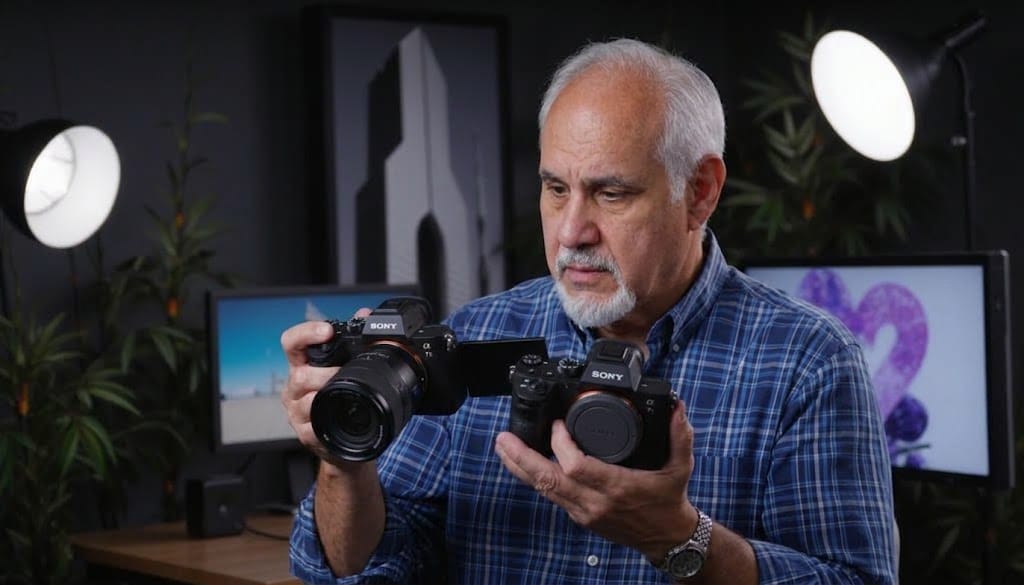
Sony A7 IV Review: The Camera That Does It All
After three months with the Sony A7 IV as my everyday camera, here is the honest verdict: it is the most balanced hybrid body Sony has made for the money.
What I loved
- The 33MP sensor with outstanding dynamic range
- Real-time tracking autofocus that just works
- 4K 60p video with no crop in most modes
What I didn't
- The menu system still takes getting used to
- Battery life is average — carry a spare
- Rolling shutter is visible in fast pans
Verdict: If you want one camera for photos and video without selling a kidney, the A7 IV is it.
Why Sony Continues to Win the Content Creation War
In the fast-evolving landscape of modern media, solo creators, educators, and hybrid filmmakers face a distinct challenge: producing high-end, broadcast-grade visuals without the luxury of a full production crew. While legacy giants like Canon, Nikon, and Panasonic boast storied pedigrees and specific technical strengths, Sony has steadily captured the lion’s share of the digital creator market.
The secret to Sony’s dominance is neither marketing hype nor brand loyalty; it is an uncompromising focus on solving the day-to-day workflow bottlenecks that solo operators actually face.
1. Autofocus You Can Trust With Your Eyes Closed
For a content creator presenting to a lens, manual pull-focus is often impossible. This is where Sony forged an early, decisive lead that competitors are still chasing. Sony’s Real-Time Eye and Subject Tracking—powered by dedicated AI processing units in newer bodies—delivers an unmatched level of reliability.
Canon’s Dual Pixel AF is remarkably smooth, and Nikon has made massive strides with its Z-mount flagships, but Sony remains the gold standard in sticky, predictable target acquisition. Features like Product Showcase Mode and automated breathing compensation reflect a manufacturer that genuinely studies how creators work: holding an item up to the lens and expecting the camera to seamlessly rack focus without hunting.
2. The Power of an Open, Mature Lens Ecosystem
A camera body is only as versatile as the glass mounted to it. Canon’s decision to tightly guard its RF mount has restricted third-party development, forcing buyers toward either budget glass or pricey L-series primes. Panasonic’s L-Mount Alliance is growing, but niche.
Sony’s E-mount, by contrast, has been open and evolving for over a decade. Creators can pair a body like the A7 IV or FX30 with stellar, cost-effective native glass from Sigma, Tamron, and Samyang. Whether you need an ultra-wide zoom for desk setups, a lightweight f/1.4 prime for cinematic depth, or a budget vlogging lens, the E-mount ecosystem offers more performance-per-dollar than any competitor.
3. True Hybrid Flexibility: The Sony A7 IV Standard
The quintessential example of Sony’s market dominance is the Sony A7 IV. After months of putting it through real-world studio and field production, it embodies the modern workhorse: the most balanced hybrid body available in its class.
- What Shines:
- The 33MP full-frame sensor delivers outstanding dynamic range and crisp stills, giving creators ample room for digital crops and thumbnail creation without compromising low-light performance.
- Its autofocus tracking operates flawlessly across humans, animals, and moving subjects.
- In-camera color science has matured dramatically with S-Cinetone, yielding healthy skin tones straight out of the camera—a critical time-saver for fast turnaround workflows.
- Trade-Offs to Keep in Mind:
- While significantly overhauled, Sony’s menu hierarchy still requires a deliberate setup phase and custom shortcut assignments.
- 4K/60p comes with a minor 1.5x Super35 crop, requiring wider focal lengths for action shots.
- Rolling shutter remains visible during aggressive horizontal whip-pans.
Even with these caveats, the verdict remains firm: if you want a single camera capable of handling professional stills, crisp 4K podcast capture, and documentary field work, the A7 IV delivers premium hybrid capability without demanding cinema-tier budgets.
The Bottom Line
Panasonic retains a dedicated following for video-assist tools and open-gate recording; Canon still attracts those who swear by its out-of-camera color; Nikon crafts superb, rugged hybrid machines. Yet, Sony consistently wins because it removes friction. Through autonomous autofocus, an unmatched lens catalog, and rock-solid reliability across photo and video, Sony has built the definitive toolkit for modern independent creators.